Project 30k
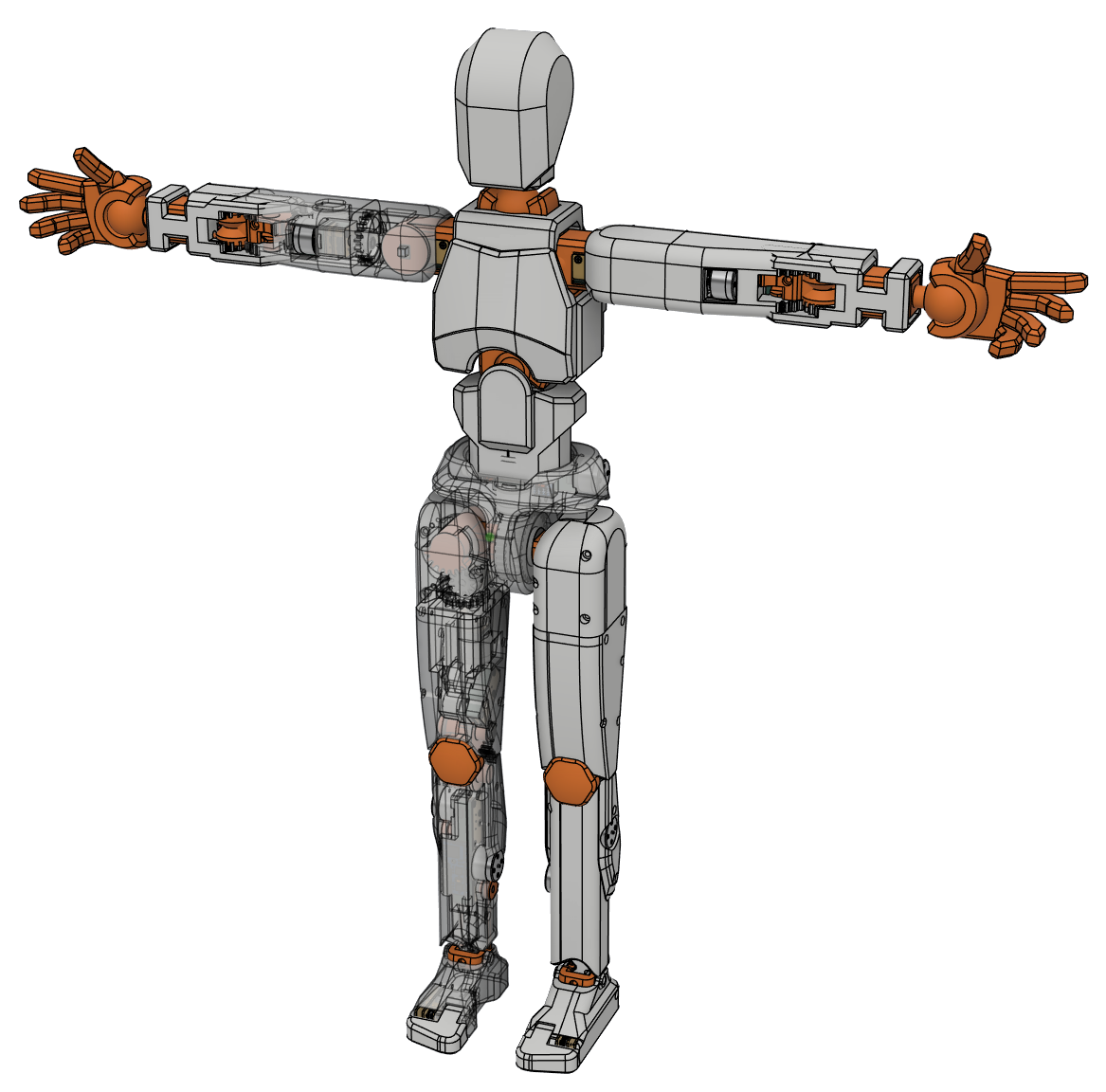
What if DUMMY13 wasn’t just a posable desk figure, but an actual moving robot? Standing 45cm tall with 36 motorized joints, Project 30k packs miniature motors, custom gearboxes, and driver boards right inside the armor.
The Idea
Bringing DUMMY13 to Life
Like many makers, we loved printing and posing DUMMY13. But we kept wondering: what would it take to make it move on its own? To fit real motors, gearboxes, and electronics inside without losing the iconic look, we scaled it up to 45cm (1/4 scale).
Front View
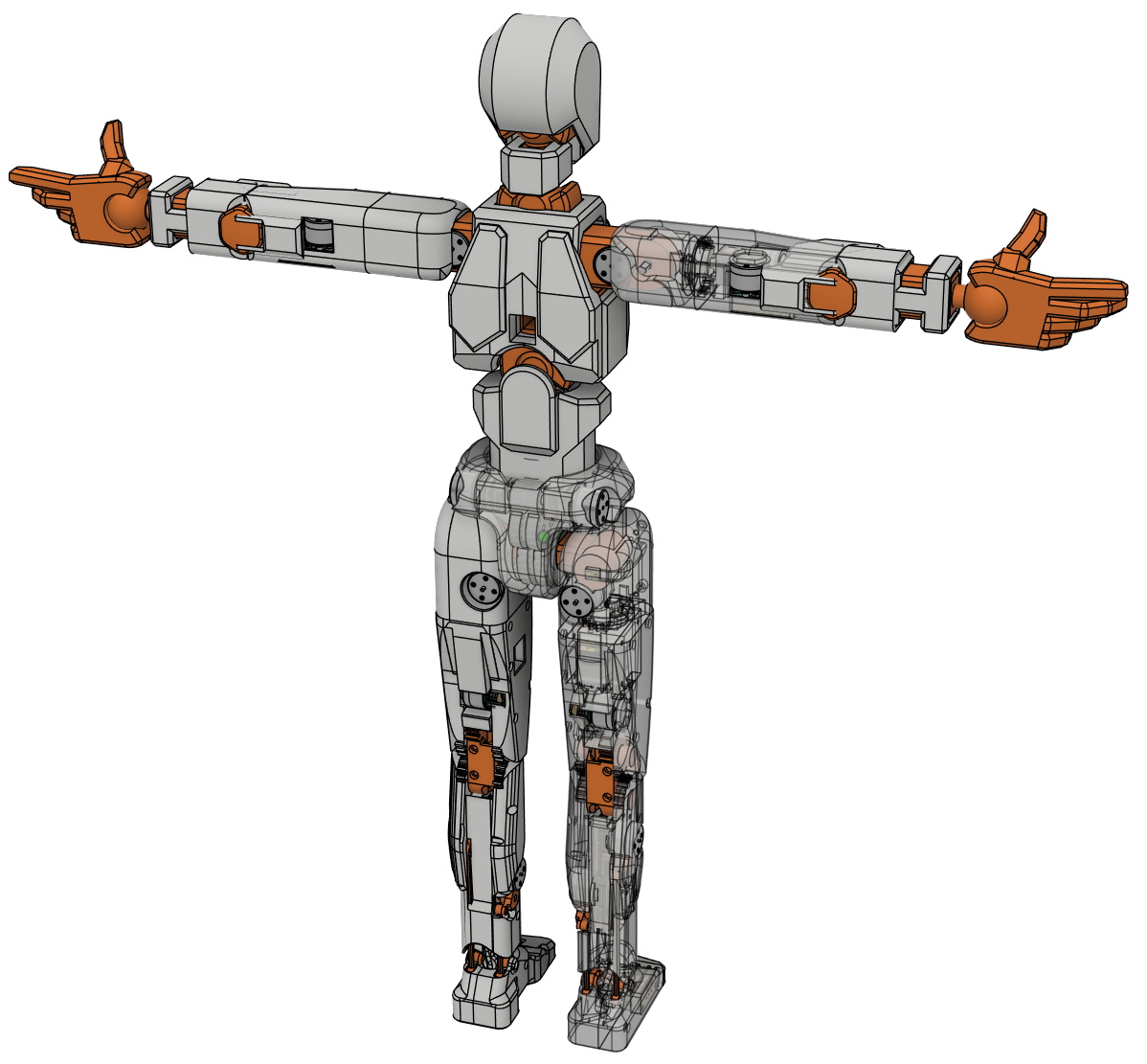
Rear View
Core & Body
The Torso: Central Hub & Waist Rotation
The torso serves as the central anchor connecting the spine, arms, and hips, balancing strength with internal space for cabling and power.
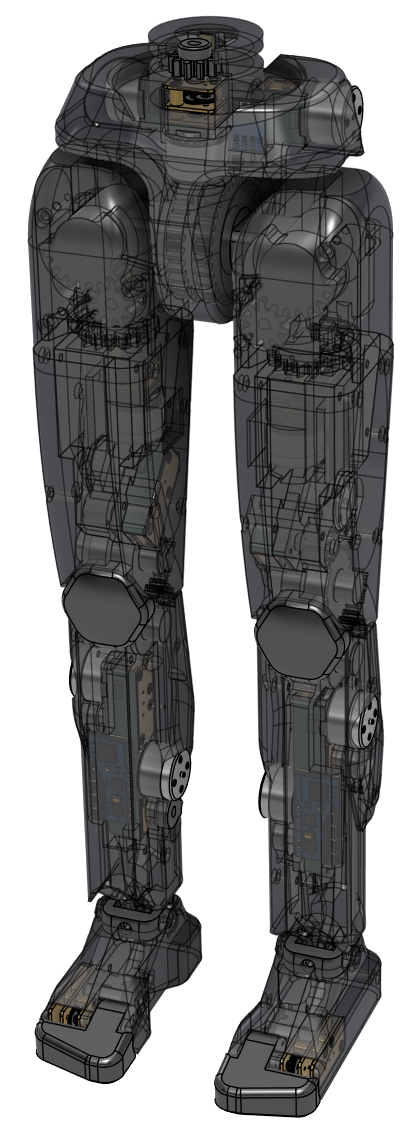
Cutaway view highlighting the top geared waist rotation unit and pelvic structural cradle.
Waist Yaw Planetary Reduction Rotation
Right at the waistline, a compact gearbox drives the central rotation axis. This lets the torso pivot smoothly over the hips without twisting cables or placing stress on the hip mounts.
Chassis Frame Snap-Fit Modular Armor
The chest, abdomen, and back armor snap securely onto an inner rigid chassis. The cavity within the chest protects central distribution wiring, keeping the exterior look clean and completely true to the DUMMY13 silhouette.
Arms & Kinematics
Geared Arms & Elbows
Lightweight, responsive, and easy to take apart when testing new poses or gestures.
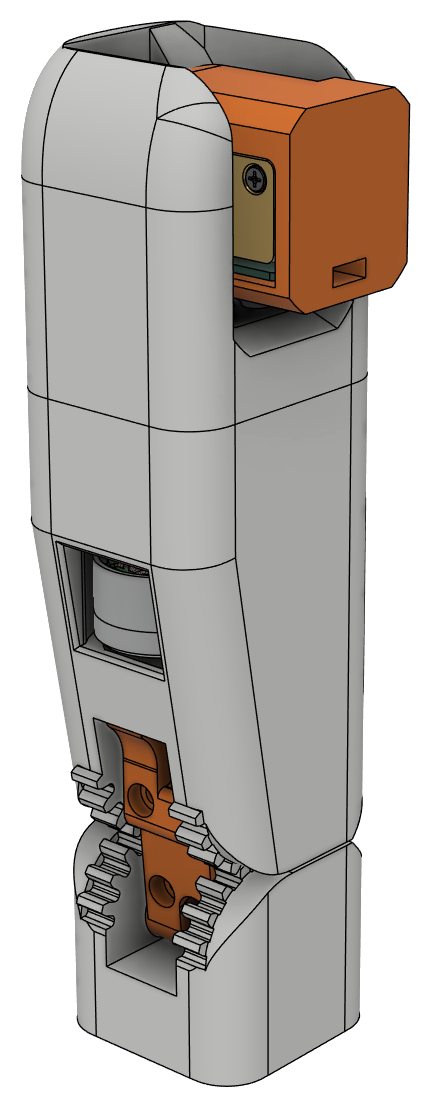 Front Mechanism
 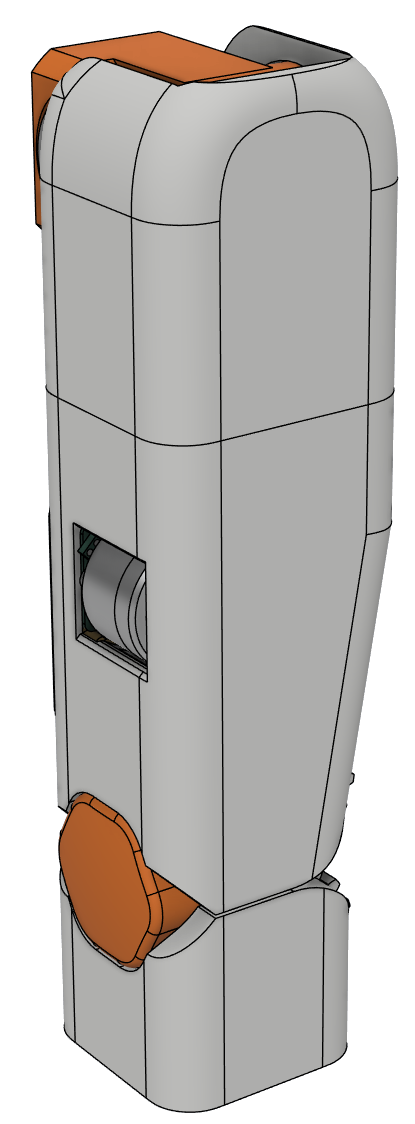 Rear Shell
 Interlocking gear teeth at the elbow with internal mounting channels for motors and fasteners.
Joint Design Printed Interlocking Gear Teeth
Each elbow features circular gear sectors printed directly into the arm chassis. The teeth mesh securely with the motor pinion, giving smooth motion and holding arm positions without sagging or wobbling.
Maintenance Easy to Take Apart & Tune
Everything fastens with standard metric screws. If a gear needs a tweak or a motor needs replacing, you can open an individual arm section in minutes without taking apart the whole torso.
Legs & Movement
Built to Stand, Balance, and Walk
Two legs carry the entire weight of the robot. We focused on strong joints, smart weight distribution, and clean wiring.
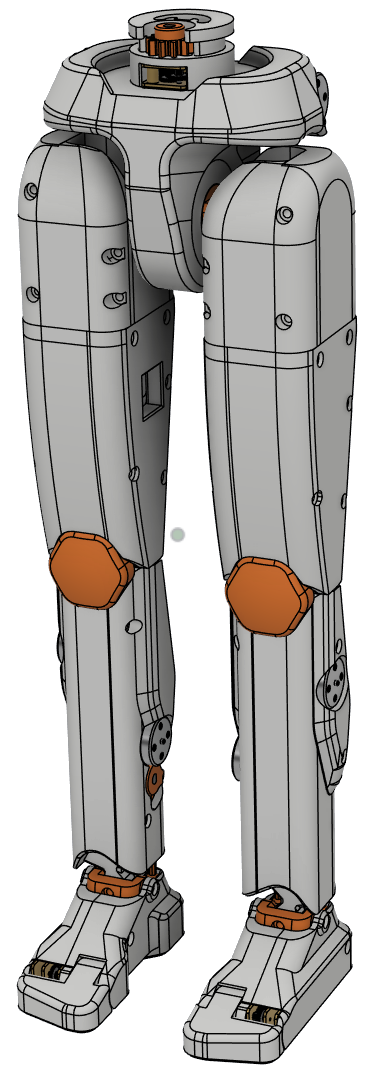
Outer Armor
Snap-fit thigh and shin shells that protect the internal mechanics.
Internal Drivetrain
A look inside: geared joints, motors, and embedded driver boards.
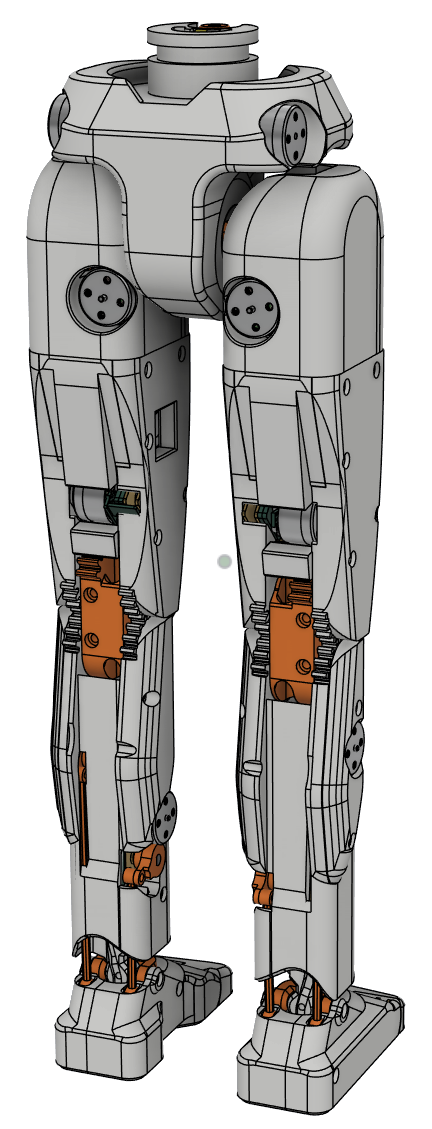
Rear Gear Teeth
Knee gear racks and ankle linkage rods for firm footing.
Hips & Knees Geared Reduction Under Load
Each hip uses paired bevel and spur gears to keep the robot upright without slipping, while the knees use interlocking gear sectors to take the mechanical stress off the motor shafts.
Electronics Driver Boards Inside the Limbs
Instead of running a bulky bundle of wires from the torso down to each foot, custom driver boards sit directly inside channels in the thighs and shins. It keeps things tidy and prevents broken wires when joints bend.